Noel Jaquin - Chirological Pioneer
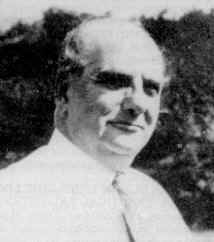
Noel Jaquin (1893-1974) was one of the most important pioneers in the
development of chirological diagnosis in this century, his written works spanning a time
period of some thirty-two years. Although he is most important as a pioneer within the
fields of health analysis and sexual and emotional evaluation from the hand, he has
contributed something to all aspects of the chirological art. His work is as a broad
canvas with a lightly sketched image, outlining the breadth of scope of the diagnostic
potential of the hand.
Jaquin first became interested in hand analysis when an uncle of his
gave him a book on palmistry as a Christmas present when he was twelve years old, although
it was some years before he developed a thorough-going passion for the subject. As a young
man, Jaquin had an almost total fascination with biology and microscopes and even from
this age was conducting his own scientific investigations. At 17, he was the youngest
member of the Queckett Society (a society dedicated to the study of microbiology) and he
had decided he wanted to embark upon a medical career. During the First World War, he was
assigned a comission in the navy but the economic disruption of the war was such that,
after demobilisation, he could not pursue his chosen career for lack of funding. He
therefore, somewhat reluctantly, went to work in his father's business which, though he
hated it, nevertheless provided him with the financial security for him to pursue his
chirological investigations.
From 1922, he determined to collect the handprints of the eminent
people of his day, and through this aim eventually was to come into contact with many
people who were to assist him in his career. Sir Edward Marshall Hall KC introduced him to
the Chief of Scotland Yard, with whom he discussed the possibility of using the whole
handprint in criminological investigations, and through Sir James Galloway of Charing
Cross Hospital, he was able to continue his health researches through examining the hands
of hospital patients. Sir Edward Marshall Hall was to say of Jaquin's work that he was
sure that chirology would be of inestimable assistance to both the law and medicine.
He wrote his first book on handreading in 1925 and in 1926 was invited
to pen an article for Pearson's Magazine. This was to prove to be the big
breakthrough in his career, for in this article, he made an offer to analyse the hands of
any readers who cared to send in a copy of their handprints for assessment. The response
was staggering: more than 10,000 pairs of handprints were sent in! Two further articles in
the magazine occasioned a similarly voluminous response and with all these hands to
consider and letters to reply to, Jaquin was kept busy for several years. Moreover, such a
vast collection of prints enabled him to base his chirological investigations on a sure
empirical footing. On several occasions, the handprints sent in were not from the owners
of the hands themselves, but from sceptical doctors wishing to check Jaquin's claims that
he could detect health problems from the patterns of the hand alone. He reports many
examples where the doctors replied to his diagnosis with an affirmative testimony.
Jaquin maintained many friendships with doctors throughout his career
and was therefore able to have his diagnoses confirmed in many cases. Moreover, some of
his doctor friends would even ask Jaquin to assist them, especially in the diagnosis of
their more difficult cases! One relationship of importance was that with Dr Guyon Richards
who was an important pioneer of both radiesthesia and homoeopathy. Jaquin also had a firm
belief in the virtues of homoeopathy and would often recommend homoeopathic remedies to
those who consulted him. The main bulk of Jaquin's contributions to the development
of chirology lie therefore in the field of health diagnosis from the hand.
Jaquin pioneered his own research into the dermatoglyphic patterns of
the hand and was the first to assert the psychological significance of fingerprint
patterns. He also researched their physiological significance, coming up with similar
results to those modern (1970's+) dermatoglyphic researchers who have correlated the
various fingerprint patterns with inherited tendencies towards specific diseases. More
importantly, he was the first to investigate the significance of the degeneration of
skin-ridges in the palm itself and to correlate these with specific bacteriological
infections of specific organs of the body, this aspect of his research being a natural
consequence of the confluence of his two abiding interests, chirology and microbiology.
Skin ridge dissociation is now an acknowledged phenomena within modern scientific
dermatoglyphic research and has shown itself to be a powerful means of diagnosing present
disease conditions.
Jaquin also conducted research into the chirological manifestations of
heart disease, cancer, digestive dysfunctions, respiratory illnesses, kidney problems and
diseases of the genito-urinary system in general. He believed firmly in the contribution
made by both our psychological and emotional well-being to our physical condition of
health and considered his diagnosis of health and illness from the hand with this in mind.
The best summary of his approach to health diagnosis from the hand can be found in his
work of 1933, 'The Hand of Man'. A second book, 'The Hand Speaks' of 1942, is also
invaluable as a documentation of Jaquin's work, for it is an anthology of handprints and
case histories with a particular emphasis upon the diagnosis of illnesses and emotional
and sexual problems.
Altogether, Jaquin wrote some nine books on chirology and although some
of these are rather more popular in orientation, all of them contribute something new to
the study of the hand. In his later years, it is clear Jaquin became somewhat more
metaphysically inclined and less disposed towards a purely scientific and empirical
approach to the study of the hand. His last two books 'The Human Hand' (1956) and 'The
Theory of Metaphysical Influence' (1958) concentrate far more on his general theories
about life, the universe and everything and expound more of his philosophy of handreading
than its actual practice. Just before the end of the Second World War, in April 1945, Noel
Jaquin helped to found the Society for the Study of Physiological Patterns, in conjunction
with Hilda Jaffe, Beryl Hutchinson and Margaret Hone amongst others. This was to be a
society dedicated to promoting the scientific importance of chirology as a diagnostic tool
in the analysis of psychological and pathological conditions. The society continues to
flourish to this day, providing a forum for chirological debate which has hosted some of
the most eminent chirologists of modern times.
Jaquin's self-professed aim was always to make handreading '..a
definite science that will be of practical value to humanity' and throughout his life
he always remained committed to help all those who came his way. Always a seeker of the
truth rather than humbug, whatever conventions may be disrupted in so doing, Noel Jaquin
stands today as one of the noblest of all the pioneers in the history of the study of the
hand.